Give your coding agent expert, always-current knowledge of the Maxio Advanced Billing API and SDKs, so it writes integrations that compile and work the first time.
Coding agents guess at APIs they have not seen. The Maxio Context Plugin removes the guessing: it installs skills and an SDK map of all 268 operations into Claude Code, Cursor or Codex, grounded in the typed SDKs generated from Maxio's OpenAPI definition. Your agent plans against the real contract and writes typed calls that compile.
“Add metered billing for our API tokens with Maxio.” The integrate skill loads.
3
Plan
The agent writes a plan and contract sheet from the SDK map: every call, field and error it will handle.
4
Ship
Typed SDK code with Basic auth, retries, 422 handling and tests that fake the transport.
Sample apps built with the Context Plugin4 apps
Four working apps for the billing problems Maxio customers solve every day. A coding agent built each one with the Maxio Context Plugin installed. They call Maxio only through the typed TypeScript SDK, and a Wire drawer in every app shows each SDK call, its HTTP request and response, retries and error handling. They open on a sandbox site with sample data, so you can try them without an API key.
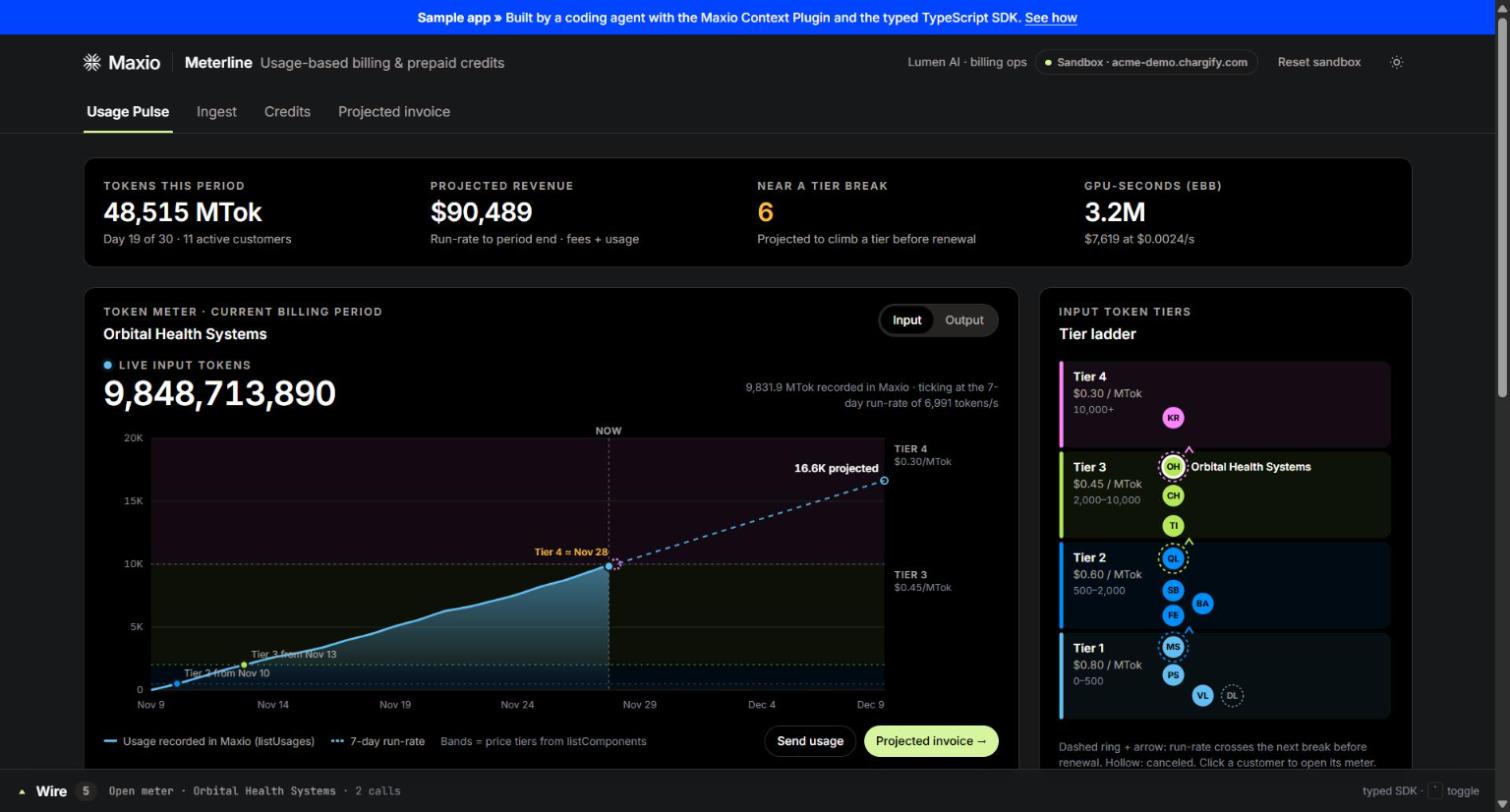
Meterline
Usage-based billingPrepaid credits
Lumen AI bills its customers for API tokens in tiers, GPU-seconds through event-based billing, and prepaid credit packs. Meterline ingests usage, shows each customer's tier and credit burn-down, and previews the next invoice line by line.
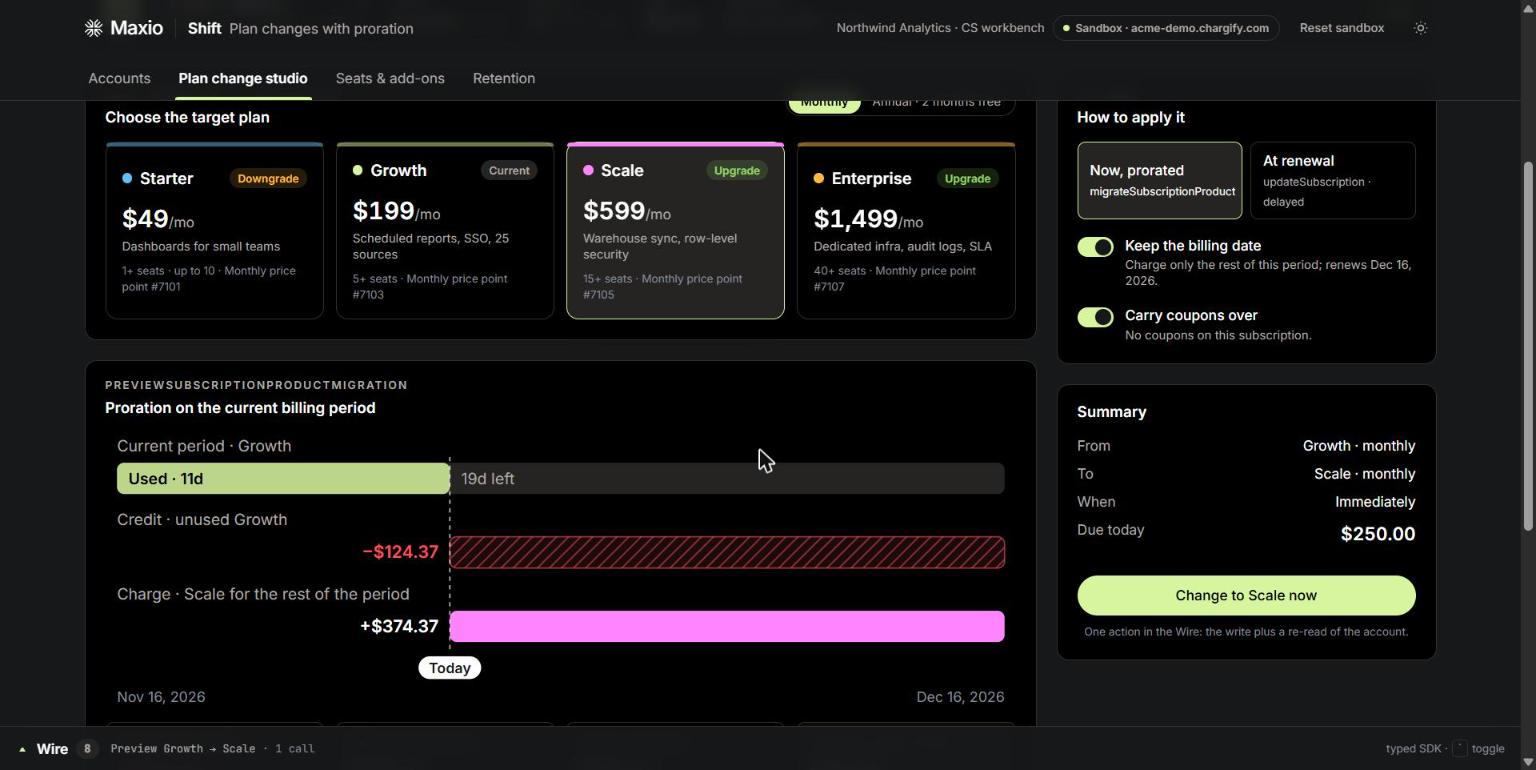
Northwind Analytics' customer success team changes plans, seats and add-ons with confidence. Shift previews every change first: a proration timeline and a before-and-after invoice. Then it applies the change, and handles coupons and scheduled cancellations to keep customers.
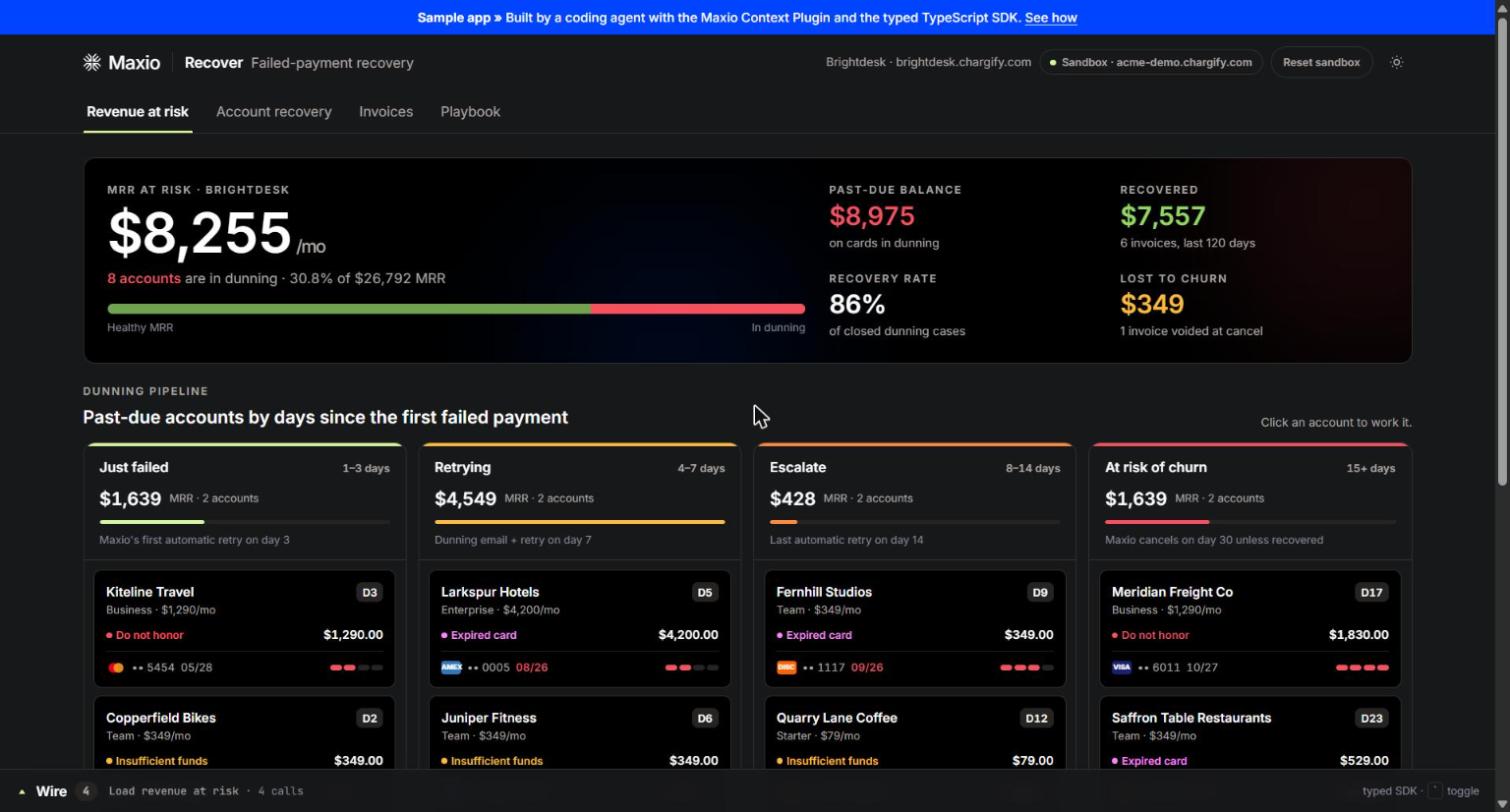
Brightdesk's collections cockpit. It shows each past-due account by stage, why the payment failed and the invoice's full history. From there the team can request a new card, retry the payment, record a payment made by check, or pause the subscription, all without leaving the app.
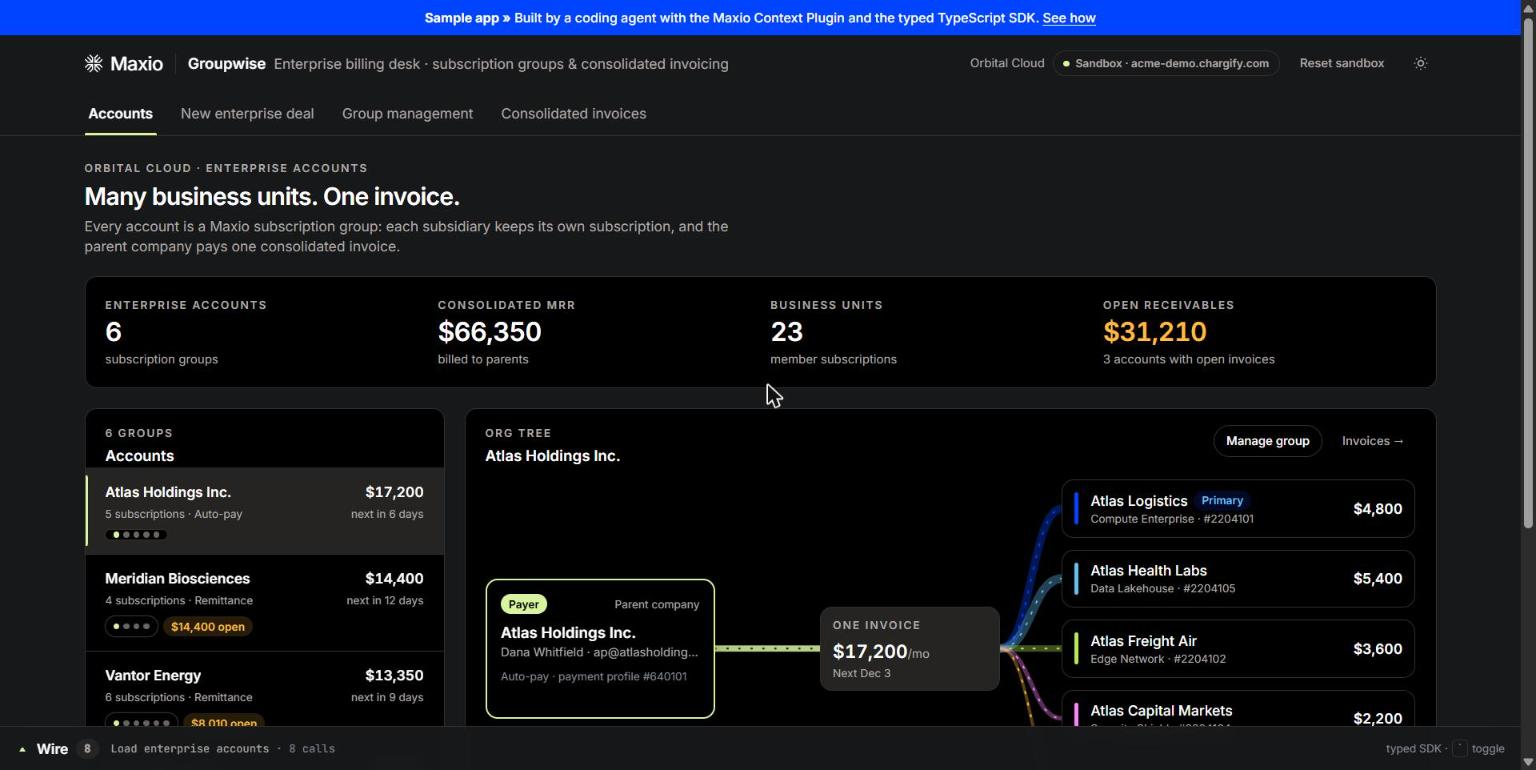
Orbital Cloud bills enterprises that have many business units on one consolidated invoice. Groupwise draws each account's org tree, quotes new multi-entity deals with a proforma invoice before signup, manages group members and payers, and breaks down each consolidated invoice by segment.
Installed the plugin: npx context-plugins install https://maxio-test-wp.pages.dev/__downloads/plugin.zip
Loaded typescript-integrate-maxio-advanced-billing. Following it, the agent wrote maxio-plan.md with a contract sheet built from sdk-map.md and map/operations/*.md.
Built the client once (ServerEnvironment.Us, site subdomain, Basic auth, retry policy) and routed every call through it.
Used the models, error-handling and testing skills to write code for Maxio's 422 errors arrays, decode failures and on-by-default retries.
Wrote a smoke test that calls every operation against a sandbox that answers in Maxio's wire format. The SDK's own schemas validate every response.
Prompts to try
With the plugin installed, paste one of these into your agent.
Create a Maxio subscription for an existing customer on the “growth-monthly” product, with 25 seats on the “seats” component and a 20% coupon. Handle 422 validation errors and show the messages to the user.
Every hour, send our API token counts to Maxio as metered usage in batches, without double-counting if a run is retried. Add tests that fake the HTTP transport.
Before a customer upgrades from Starter to Scale, preview the prorated charge with Maxio and show the amount. Apply the change only when they confirm.
List every past-due subscription with its open invoices and card on file, and email a request to update the payment method to those whose card has expired.